Legal, religious or symbolic: getting married in Spain from abroad
The three routes most international couples take, in plain words — and what each one means for the day and for the photographs.
The three routes most international couples take, in plain words — and what each one means for the day and for the photographs.
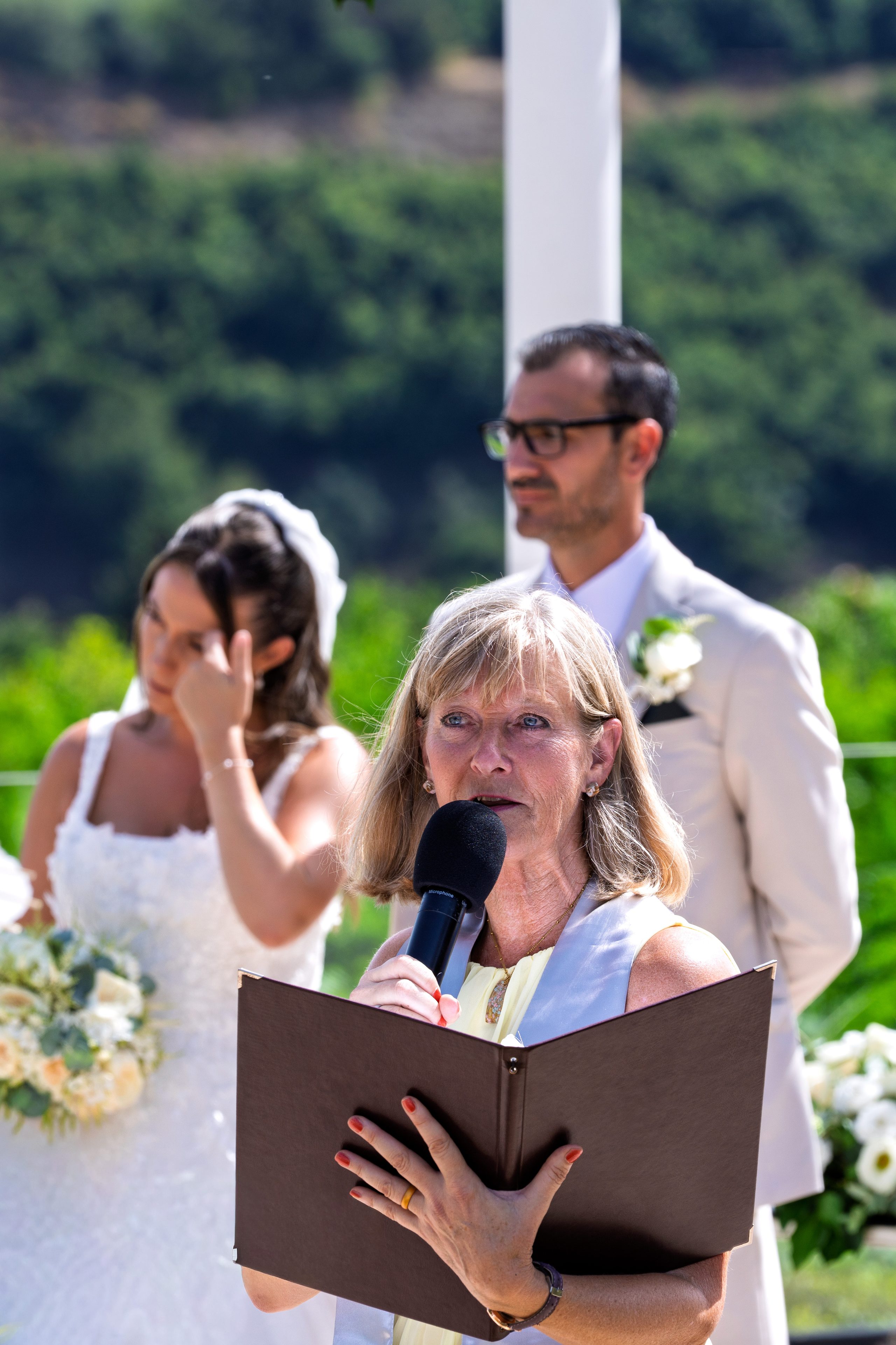
A civil marriage in Spain generally requires at least one of you to be Spanish or legally resident in Spain. The paperwork goes through the Civil Registry where you live and can take weeks or months, so for couples who live abroad it is rarely the easy option.
Civil ceremonies at a town hall are usually short. Plan the photographs of the two of you and your guests for afterwards.
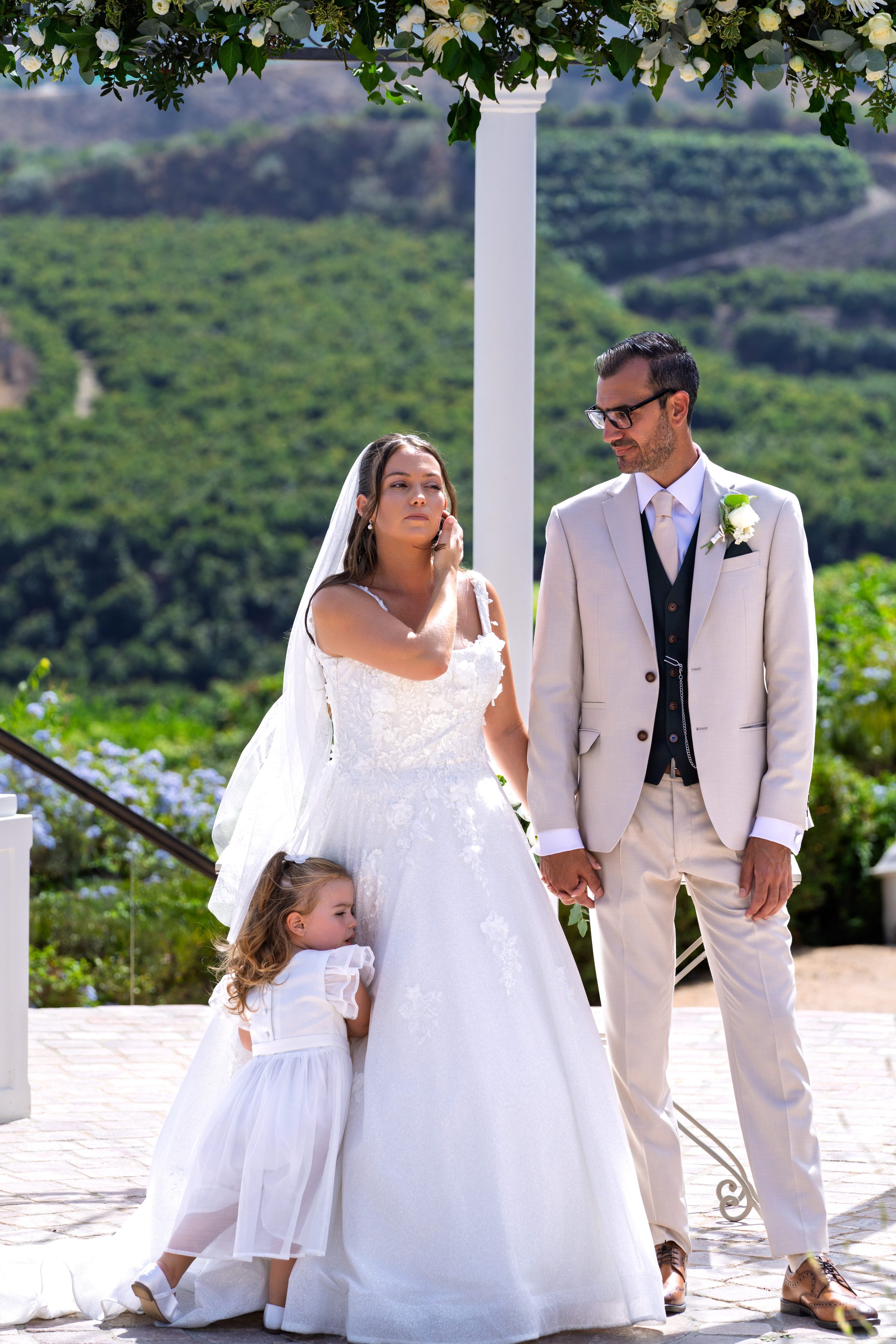
A Catholic wedding in Spain is recognised in law, but for couples from abroad it is arranged through your parish at home and the parish in Spain, with certificates and preparation that take months. Other faiths have their own rules.
Churches often limit where a photographer may stand and whether flash is allowed. Ask early and tell me, so I can plan around it.

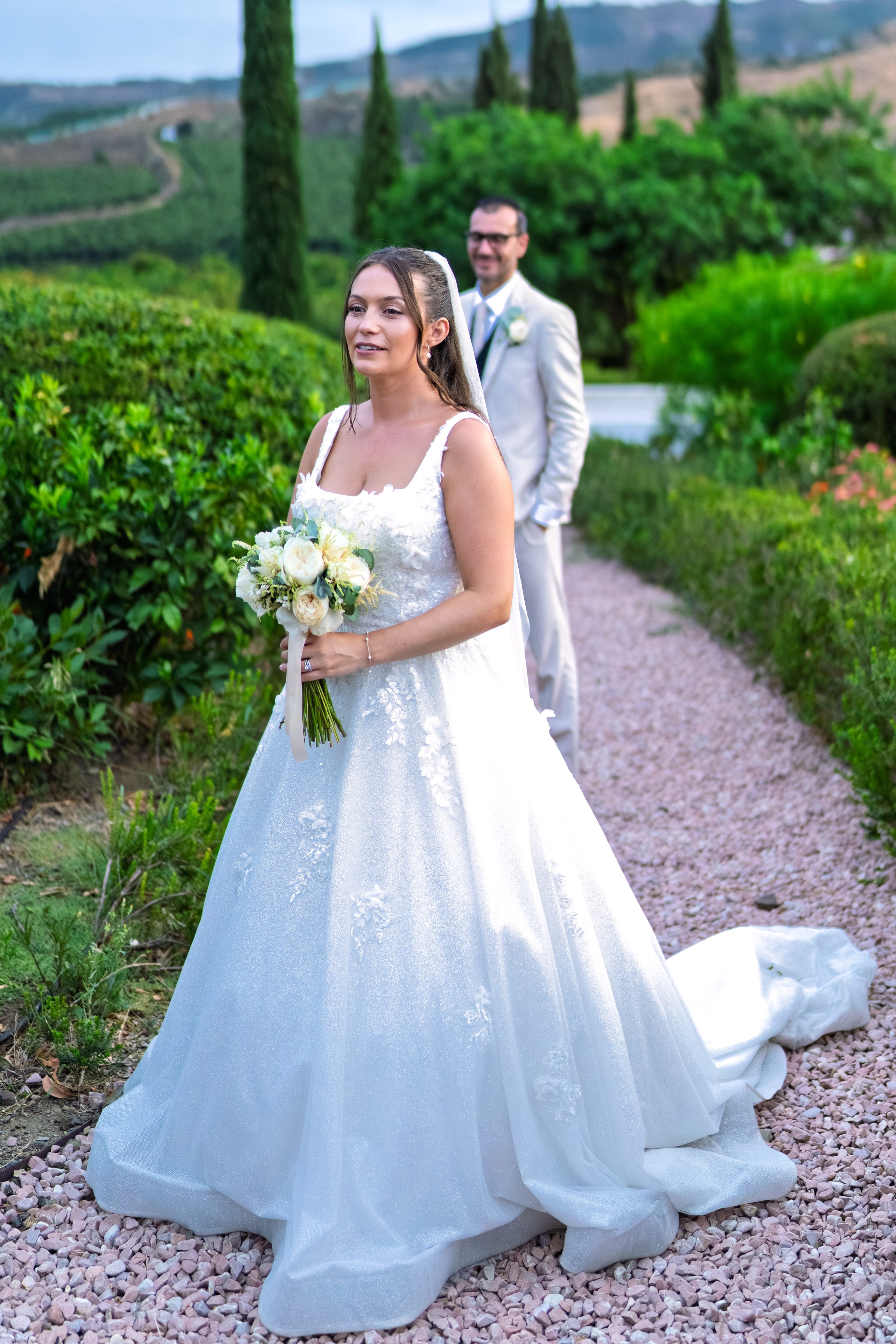
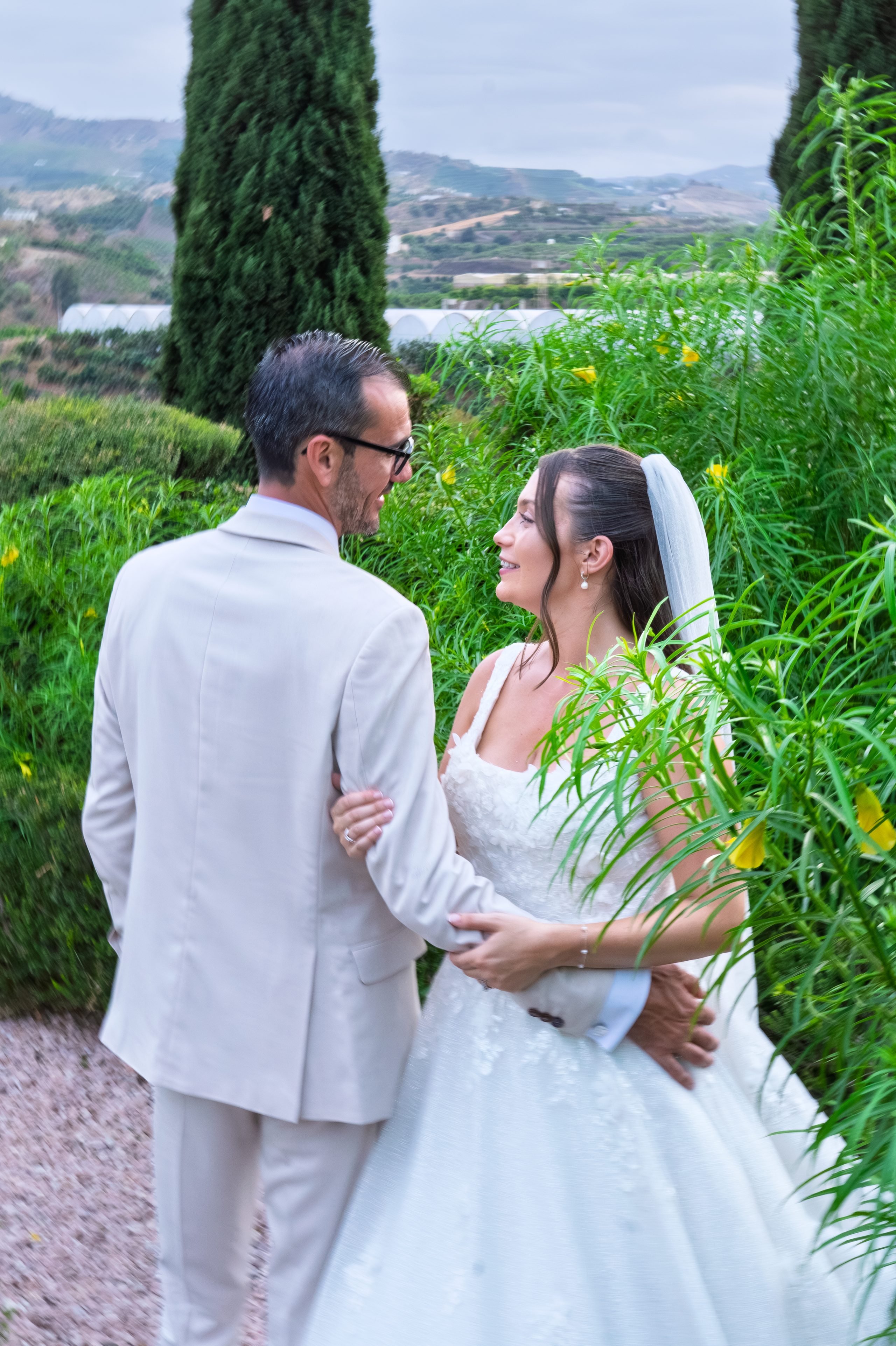
Most international couples marry legally at home — at a registry office, often with just two witnesses — and hold the celebration in Spain as a symbolic ceremony. It has no legal effect, and that is what makes it free: any place, any time, any language, and any form — humanist, laïque, spiritual or entirely your own, led by a celebrant or by a friend.
A finca, a garden or a clifftop all work. A beach may need permission from the town hall, so check before you plan it.
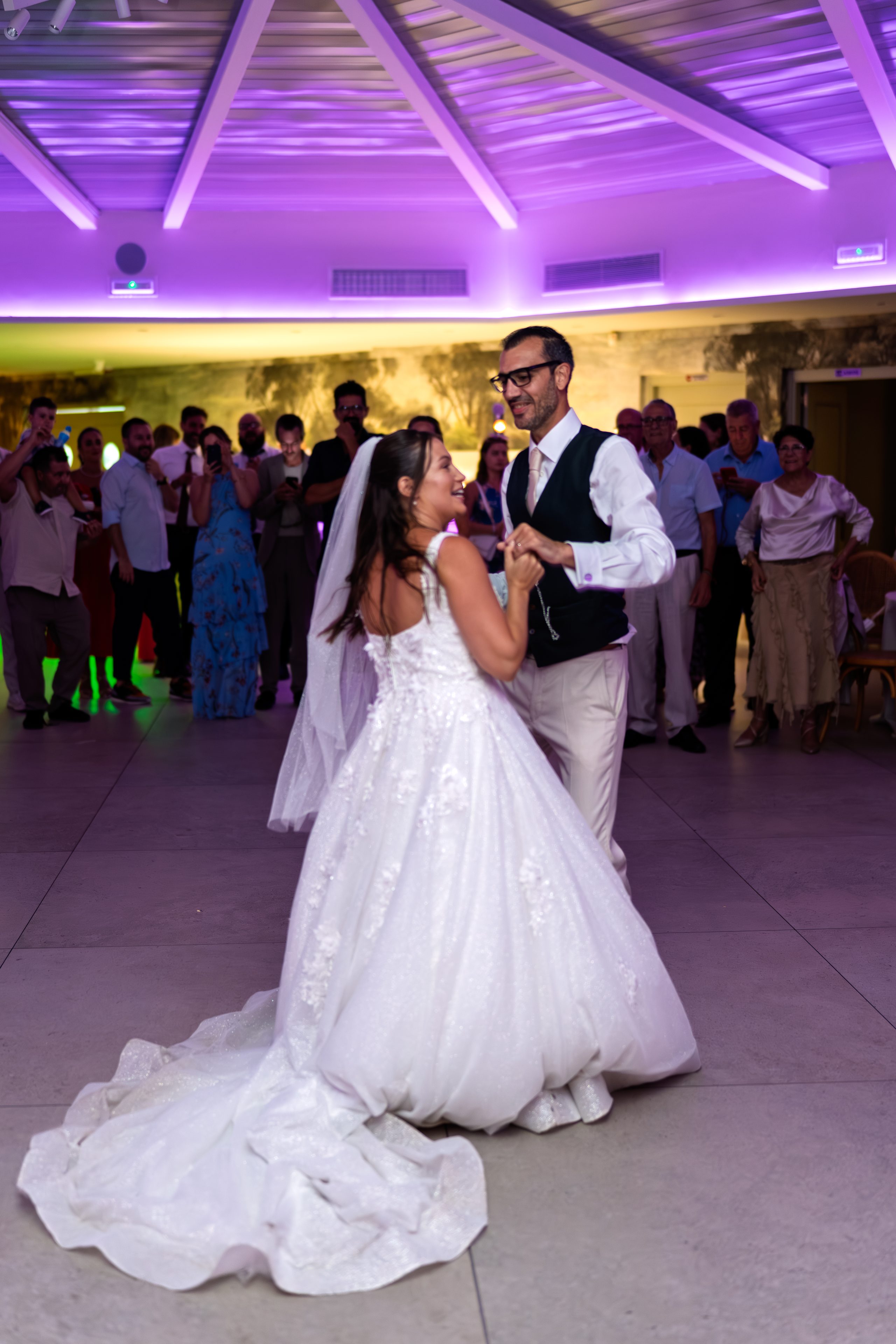
With a symbolic ceremony you choose the hour, so you can place it for the best light — see golden hour times by month.
I photograph civil, religious and symbolic ceremonies. I work in English, French, Polish and Russian, so if your ceremony is in one of those languages I follow every word and know when the moment is coming.
This is general information, not legal advice. The rules change and depend on your nationality, so check with your registry office, your consulate or a lawyer.
Yes, but a civil marriage generally needs at least one partner to be Spanish or legally resident in Spain, and the paperwork takes time. Most couples from abroad marry legally at home and hold a symbolic ceremony in Spain.
No. It has no legal effect, so the legal marriage is done separately, usually at home before or after the celebration.
Yes — civil, religious and symbolic ceremonies, including humanist and laïque ones.
Dates go early for May, June and September. Send the date, the place and the feel you have in mind — I reply as soon as possible, guaranteed.
Share your plans